South America Ocean Freight Rates August 2026: SCFI Rebounds, Maersk's PSS and the ZIM Falcon Service Wildcard
After six weeks of declines exceeding 30%, South America freight rates leveled off and edged higher in the last week of July 2026. This article breaks down the SCFI rebound, Maersk's PSS surcharge tables on the ECSA/WCSA lanes, Argentina's pilotage crisis, and how the new ZIM Falcon Service launching September 13 will reshape East Coast South America supply.
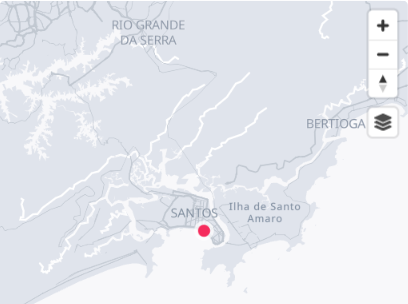
After six consecutive weeks of decline exceeding 30%, South America ocean freight rates showed signs of stabilizing and edging higher in the last week of July 2026. The SCFI (Shanghai Containerized Freight Index) rose for the first time in three weeks, while the Shanghai-Santos benchmark rate climbed roughly 5% off its low. This is not, however, a uniform recovery: West Coast South America (WCSA) is rebounding strongly on accumulated blank sailings and steady auto-cargo demand, while East Coast South America (ECSA) has so far only "moved sideways," propped up by Maersk's mandatory PSS surcharge rather than genuine demand recovery. At the same time, Argentina's pilotage crisis in early August and the arrival of ZIM's new Falcon Service in September are introducing fresh variables for Vietnamese import-export businesses shipping to or from the region. This article summarizes the key developments and offers lane-by-lane booking recommendations.
1. Market Overview: SCFI Breaks a Three-Week Losing Streak
The SCFI composite index moved as follows through July 2026:
The July 31 gain was driven mainly by the Transpacific lane, which surged over 12% following the August 1 GRI, pulling the broader market up with it — South America benefited from that wider momentum. One caveat: a 4.46% weekly gain does not mean the correction is over; it indicates the market has found a temporary floor.
The Santos benchmark rate cycle illustrates this clearly: from a peak of roughly $7,800/40-foot container (late June), rates fell to a trough of $5,300-5,550/40HQ (late July, a cumulative decline exceeding 30%), before recovering modestly to $5,600-6,300/40HQ in early August — roughly a 5% rebound off the low.
2. A Clear Split Between West Coast and East Coast South America

Not all South America lanes are recovering at the same pace. The comparison below shows the gap between the two coasts:
Why WCSA is rebounding more strongly: three reinforcing factors. First, carriers have accumulated blank sailings — Maersk cancelled an August AC1 round trip, while MSC, HPL, ONE and HMM jointly blanked a direct sailing in late July — tightening supply materially within a four-week window. Second, the Panama Canal's Neopanamax draft drops to 48.5 feet (14.78m) on August 15, the third consecutive reduction, forcing large vessels to lighten loads and indirectly reducing per-voyage capacity on the Far East-WCSA lane. Third, steady auto-cargo demand (parts and finished vehicles) from assembly plants in Mexico, Colombia, and Ecuador provides a demand base that the ECSA lane lacks.
Why ECSA is only "moving sideways": although Shanghai-Santos rates have recovered from their low, this is best described as cautious stabilization rather than a genuine reversal, due to three headwinds — Argentina's pilotage crisis (Section 4) disrupted supply for 3-5 days precisely when carriers needed volume to support the August 1 GRI; Maersk's PSS (Section 3) sets a hard cost floor rather than a demand-driven one; and the shadow of the ZIM Falcon Service is causing many shippers to delay bookings, knowing new capacity is arriving mid-September.
3. Carrier Actions: The August 1 GRI and Maersk's PSS Surcharges
Carriers implemented a General Rate Increase (GRI) across South America lanes from August 1, 2026, but realization varied by lane: WCSA/Mexico/Central America achieved high realization thanks to tightened supply and steady auto-cargo demand; ECSA (Brazil/Argentina/Uruguay) achieved only partial realization due to weak demand, the Argentina disruption, and shippers waiting on ZFS; the Caribbean achieved moderate realization, supported by canal draft limits but constrained by demand-side pressure.
On August 4, 2026, Maersk announced a Peak Season Surcharge (PSS) on its X4FS service (Far East-East Coast South America), effective August 20 (Korea August 22):
This applies to cargo destined for Argentina, Brazil, Paraguay, and Uruguay, covering dry, reefer, flat rack, open top, and tank containers. At $2,000 per 40-foot container, this is effectively a hard cost floor on the ECSA lane from August 20 — shippers should book before this date to avoid the added cost. Carriers competing with Maersk (CMA CGM, COSCO, Hapag-Lloyd) are likely to announce similar PSS within 7-14 days; monitor carrier notices closely.
Maersk also implemented a second PSS on its C1E service (Far East-Mexico/WCSA/Central America/Caribbean), effective August 3 (Korea August 14, Puerto Rico excluded): $750 per 20-foot container (dry and reefer), $1,500 per 40-45-foot container (dry and reefer). This actually represents a downward revision from a previously higher PSS level rather than an entirely new charge — shippers who had budgeted for the earlier, higher figure may see modest relief, though the surcharge remains substantial.
Beyond Maersk, other notable moves: MSC plans one WCSA blank sailing in late August, further tightening west coast capacity; the CMA CGM/COSCO alliance blanked a joint ECSA sailing on August 1 — the third consecutive void in early August; and Maersk's ASAS2 voyage 632E was cancelled, further reducing ECSA capacity.
4. Port Pressure: Santos Congestion and Argentina's Pilotage Crisis
Santos handles roughly 40% of Brazil's container volume and remains the most critical port in South America for container logistics. In the first four months of 2026, Santos processed 1.91 million TEU, up 5.4% year-on-year, operating consistently above design capacity. Hapag-Lloyd's Week 28 South America East Coast report showed: yard utilization at 64-73%, berth waiting time of 8-16 hours — operating above design load but still functional. Aftershocks from the May 2026 port strike have not fully dissipated; dockworkers have threatened rolling stoppages, though no formal action has materialized in August — the labor environment remains fragile.
The most significant event of early August 2026 was Argentina's pilotage crisis — a five-day disruption that stranded over 150 vessels. Here is the timeline:
This disruption cost ECSA supply chains 3-5 days of booking momentum right as carriers were trying to implement the August 1 GRI. Cargo bound for Buenos Aires was delayed at origin or diverted for transshipment via Montevideo. Businesses with Argentina-bound cargo should budget for congestion surcharges and schedule adjustments through at least mid-August, and verify destination port status before booking new shipments.
On the west coast: Callao (Peru) is operating normally but with tight yard turnaround; the Chancay megaport continues absorbing overflow volume, easing pressure on Callao's terminals. Balboa (Panama) faces slightly higher feeder costs due to canal draft restrictions. Manzanillo and Lazaro Cardenas (Mexico) are running near capacity on sustained nearshoring volumes — Manzanillo's throughput has grown 70% over four years.
On the Panama Canal: the Panama Canal Authority (ACP) is implementing its third consecutive Neopanamax draft reduction: 15.09m (49.5ft) from July 3, 14.94m (49.0ft) from July 24, and 14.78m (48.5ft) from August 15. At 48.5 feet, large vessels (10,000+ TEU) must lighten loads to transit, raising per-box costs — most impactful on the Far East-WCSA lane, where most deployed tonnage transits the canal.
5. September's Biggest Wildcard: ZIM Falcon Service Reshapes ECSA Supply
On July 2, 2026, ZIM announced the Falcon Service (ZFS) — an independently operated (non-alliance) service from the Far East to East Coast South America. The maiden voyage departs Shanghai on September 13, 2026. This is considered the most significant ECSA supply-side event since the five-carrier alliance formed in May 2026.
Key specifications: operated exclusively by ZIM (no vessel-sharing partners); an 11-vessel fleet with 7,000-11,000 TEU capacity; weekly fixed-day service; replaces the previous ZIM-Maersk ASE (Atlantic South Express) service; accepts reefer cargo (extensive plug capacity), out-of-gauge cargo, hazardous goods, and EVs.
Port rotation: Shanghai → Ningbo → Hong Kong → Yantian → Rio de Janeiro (Yantian-Rio: 24 days) → Santos (Yantian-Santos: 26 days) → Paranagua → Navegantes → Montevideo → Buenos Aires (Buenos Aires-Shanghai return: 27 days, claimed as the fastest River Plate-to-Far East transit) → back to Shanghai.
The 24-day (Yantian-Rio) and 26-day (Yantian-Santos) transit times are competitive with — and in some cases faster than — the existing five-carrier consortium's best times.
Market impact can be viewed across four dimensions. First, supply injection: with 11 vessels of 7,000-11,000 TEU, ZFS adds roughly 55,000-88,000 TEU of monthly capacity to the ECSA lane — a material addition to a market that has been defined by capacity discipline since the May 2026 alliance restructuring. Second, a competitive shift: ECSA moves from an effective duopoly (the five-carrier consortium of CMA CGM/COSCO/OOCL/Evergreen/PIL on one side, Maersk's ASAS2 on the other) to three-way competition, with ZIM as an independent operator offering more flexible commercial terms. Third, transit-time pressure: the 24-day Yantian-Rio benchmark pressures incumbents running multi-port rotations (such as Hapag-Lloyd's SEC service, which calls at 10 ECSA ports) to restructure or risk losing time-sensitive, high-value cargo. Fourth, rate implications: before September 13, ECSA rates lack a foundation for sustained reversal because shippers know new capacity is coming; once ZFS enters service, the added supply will cap any upside even if demand strengthens.
For ECSA shippers, the August window — after the GRI, before ZFS — is the tactical opportunity to lock in rates before the competitive landscape shifts in mid-September.
6. Recommendations for Vietnamese Import-Export Businesses
- Shorten quote validity to 3-5 days. The gap between quoting and booking has widened in recent weeks; a quote valid for 14 days could be $200-400/40HQ off current market rates by the time you book.
- Get written confirmation on whether PSS, GRI, and Panama Canal low-water surcharges are included in the quoted rate, with specific effective dates (PCD). Since Maersk applies two different PSS levels for ECSA (X4FS) and WCSA (C1E), a quote that doesn't itemize surcharges by lane is incomplete.
- Clarify rollover responsibility during peak season, especially on WCSA following the recent blank-sailing buildup — confirm in writing who bears storage, demurrage, and rate-difference costs if cargo is rolled to a later sailing.
- WCSA/Mexico/Central America: Lock in space early for urgent cargo, as the mid-month trend points toward $6,000/40HQ; watch this threshold to gauge whether the GRI has fully realized. Non-urgent cargo can be observed in batches, since the blank-sailing effect is concentrated in early-to-mid August.
- ECSA (Brazil/Argentina/Uruguay): Book before August 20, 2026 to avoid Maersk's X4FS PSS ($2,000/40ft); don't expect significant rate increases after ZFS enters service on September 13 — the August window is the best time to lock in rates. Cargo bound for Argentina/Uruguay should budget for additional transshipment costs via Santos or Buenos Aires.
- Caribbean/Central America: Budget at least 2-3 days of operational buffer for cargo transiting the Panama Canal given the August 15 draft restriction; always check the latest carrier notices, as canal surcharge adjustments can be announced with as little as 48 hours' notice.
- Shanghai Shipping Exchange — Weekly SCFI releases, July 2026
- Maersk Line — Official PSS announcements: X4FS service (announced Aug 4, 2026), C1E service (announced Jul 28, 2026)
- ZIM Integrated Shipping Services — Falcon Service (ZFS) announcement to investors, published Jul 2, 2026
- Panama Canal Authority (ACP) — Draft restriction notices, July 2026
- Hapag-Lloyd — Week 28 South America East Coast report
- Argentina government — Decree 690/2026 on pilotage fee deregulation (issued Jul 31, 2026, suspended Aug 4, 2026)
Need shipping support?
Air Sea Worldwide (Vietnam) Co., Ltd
Ocean freight · Air freight · FCL/LCL logistics Vietnam – Latin America (Brazil, Argentina, Chile, Peru, Colombia)
Mobile: +84 968 064 737 · Email: tin.ho@asw-hochiminhcity.com.vn